
EVA Solar Cell Encapsulation Film Line
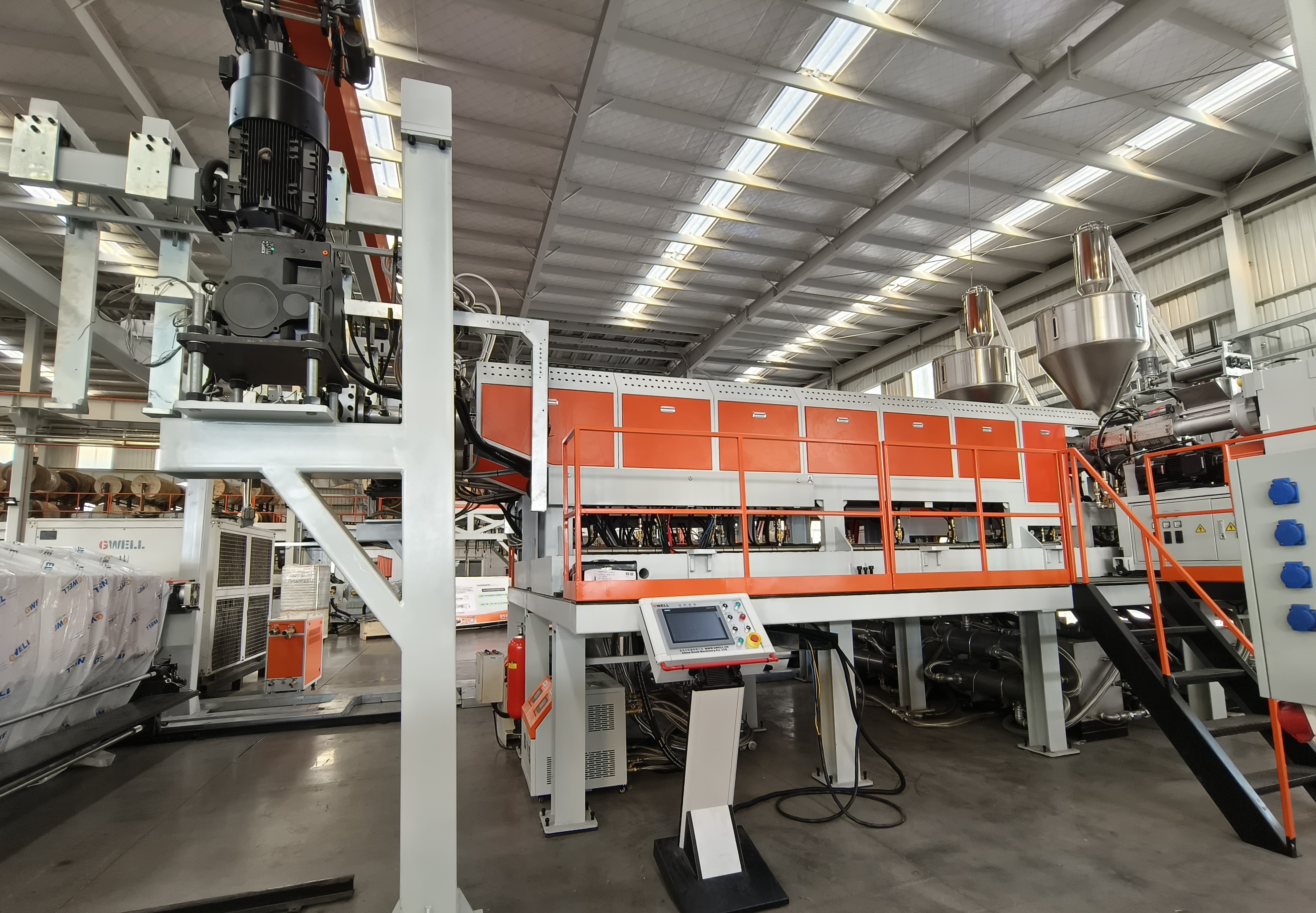
The EVA film production line adopts casting technology to produce EVA solar cell packaging film. The main raw material is vinyl acetate copolymer (EVA), which is formed by heating, casting and extruding after adding additives.
Key words:Sheet Extrusion Line
Category:
EVA POE solar film extrusion line
Description
Brief introduction of EVA Solar Cell Encapsulation Film Line
The production line of EVA film uses casting technology to manufacture EVA solar cell packaging film. The primary material utilized in this process is vinyl acetate copolymer (EVA), which undergoes heating, casting, and extrusion with the addition of various additives. Casting technology involves pouring a molten mixture of EVA and additives onto a flat surface, where it is then cooled and solidified to form a thin film. This process allows for the creation of EVA film with consistent thickness and excellent transparency, making it ideal for solar cell packaging. Additionally, the use of additives in the production of EVA film helps enhance its performance characteristics, such as UV resistance, adhesion, and flexibility. Overall, the casting technology utilized in the production of EVA film ensures high-quality and reliable packaging solutions for solar cells.
"Extrusion system Aiming at the processing characteristics of EVA polymer materials, GWELL has made special improvements to the extruder design of the production line. Over the years, it has not only created many technical advantages, but also has a deep understanding of the characteristics of single-screw technology and rich practical experience. Production costs are also reduced."
- The extruder adopts EVA-specific single-screw extrusion, and the constant temperature circulating water cooling system of the screw barrel solves the technical difficulties of EVA plasticization and non-crosslinking.
- Double-sided embossing is used on the roller body, and the technical difficulty of adhesive film sticking to the roller is solved.
- The cooling part adopts cooling roller and stress-relief cooling bed, so that the film runs smoothly and is fully shaped, ensuring that the shrinkage rate is less than 3%.
- The whole line adopts PLC automatic control to realize the operation of man-machine interface.
- The production line is equipped with an online quality monitoring and control system to ensure the qualified rate of products.
- Patent design micro-tension winder, the line speed of the whole machine production line can reach 18m/min.
Brief introduction of EVA solar film
The development and utilization of green energy has become increasingly important in recent years. Among all the green energy sources, solar energy stands out as the most prominent and promising one. Solar power generation products have seen a remarkable growth globally, with an annual increase of over 45%. China, in particular, has been making significant investments and advancements in the solar energy sector, surpassing the global average level. This trend indicates a shift towards a more sustainable and environmentally friendly energy landscape, with solar energy leading the way in the transition towards a cleaner and greener future.
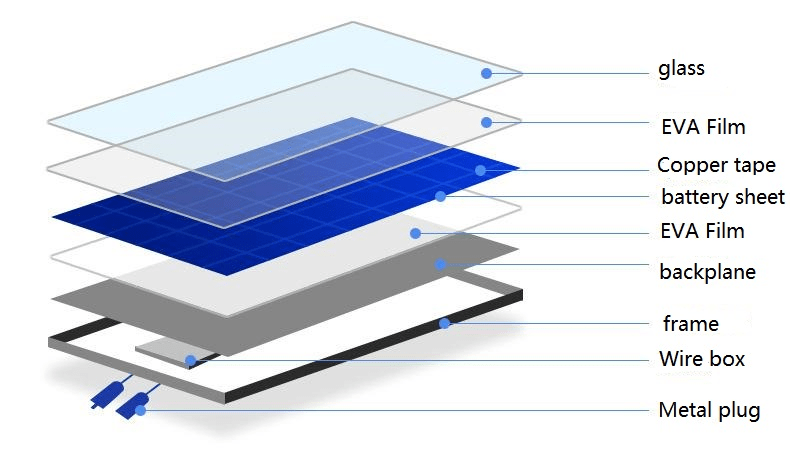
The solar cell module is composed of several layers including tempered glass, EVA film, semiconductor chip, another layer of EVA film, and a battery backplane. These layers are carefully laminated together to form a cohesive unit. Once the lamination is complete, the entire module undergoes a heating and pressing process. This process is crucial as it helps in cross-linking and curing the EVA film. This results in the formation of a strong bond that securely holds the multi-layer structure together. Not only does this enhance the durability of the product, but it also ensures that the module maintains a high level of light transmittance.
EVA film is a thermosetting and viscous film that can be used for glass interlayer. Due to the superiority of EVA film in terms of adhesion, durability, optical properties, etc., it is more and more widely used in Current components and various optical products. EVA film has become a popular choice for glass interlayer applications due to its thermosetting properties. Its ability to adhere well to different surfaces, its durability and excellent optical properties make it a reliable material for use in various components and optical products. In recent years, the demand for EVA film has been steadily increasing as more industries recognize its benefits and advantages in terms of performance and quality.
Advantages of EVA film
- Good transparency and strong adhesion can firmly bond the glass and silicon wafers on the photovoltaic power generation board together.
- It has good durability and can resist high temperatures, humidity and ultraviolet rays, etc., which can significantly improve the service life of photovoltaic panels.
- The EVA film is non-sticky at room temperature and is easy to cut. After hot pressing, thermal cross-linking curing and bonding enhancement reactions occur, resulting in a permanent adhesive seal.
Parameter
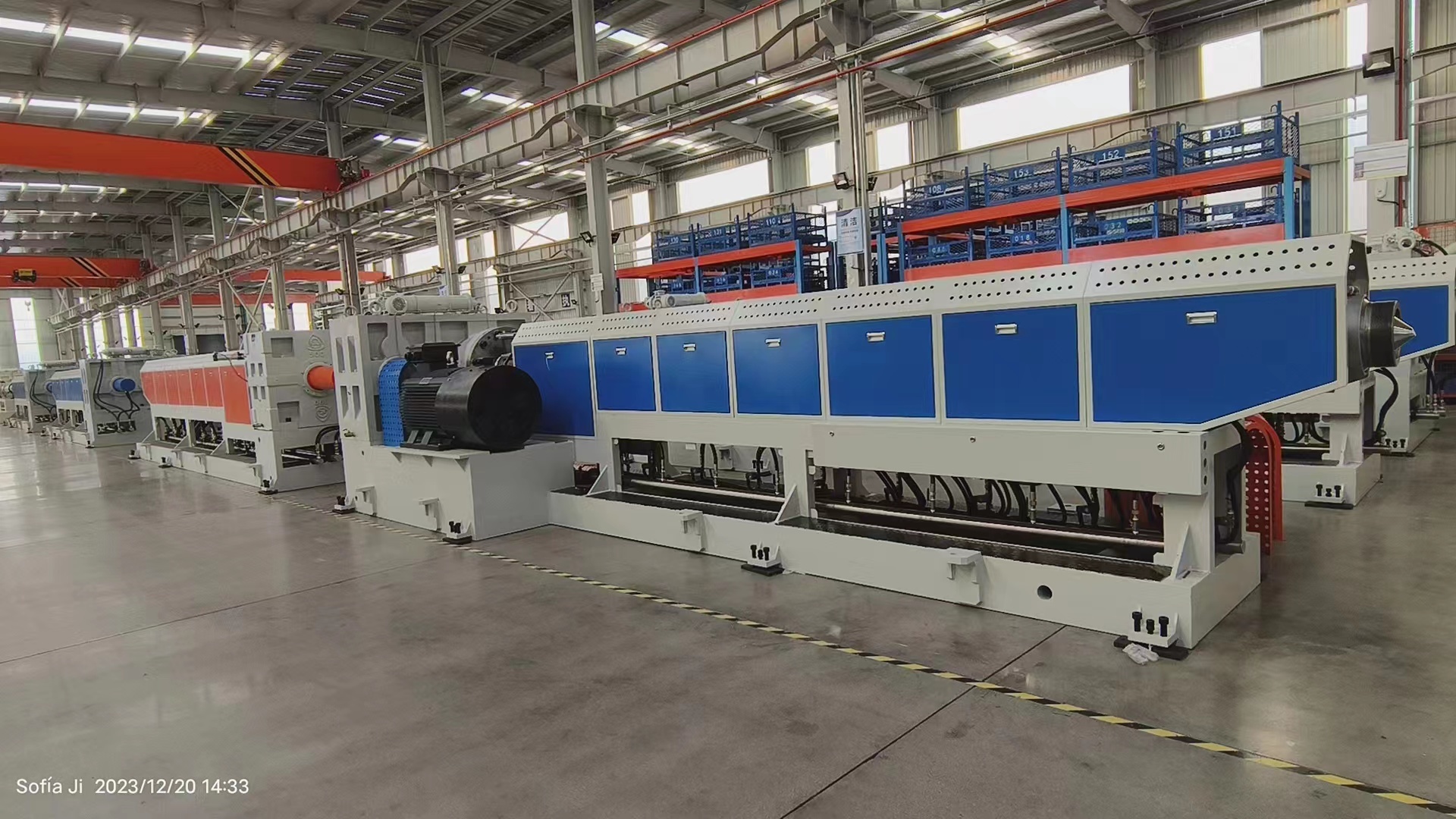
| Extruder Type | Co-extrusion GWS160+GWS160 | Co-extrusion GWS180+GWS160 | Co-extrusion GWS180+GWS180 |
| Raw material | EVA, POE | ||
| Layers | EVA, POE, EVA/POE/EVA three layers(EPE) | ||
| Net width | 2200mm-2600mm | ||
| Thickness range | 0.2mm-1mm | ||
| Max linear speed | 15m/min-18m/min | ||
| Application | EVA、POE、EPE film for solar encapsulation | ||
Application
Client
About Gwell
Innovation drives enterprise progress. Relying on the group’s strong technology, equipment strength and innovation spirit, Gwell is committed to the development of high-tech products and the international market. Gwell also actively exchanges and cooperates with world-class scientific research institutions. The new technologies, new processes and new products developed by Gwell are widely used in building materials(PP hollow sheet extrusion machine, PC optic extrusion machine), home appliances(SPC floor extrusion machine), packaging(PET sheet extrusion machine, EVOH film extrusion machine),
medical treatment(PVC rigid sheet extrusion machine), automobiles(TPU film extrusion machine, PVB film extrusion machine), new energy(EVA solar film extrusion machine), aerospace(TPU film extrusion machine), rail transit(waterproof film extrusion machine) and other fields, which are closely related to human life.
Related Product
The main components of the PC Sheet extrusion production line are selected from the world’s high-quality products (such as screws, barrels, rollers, etc.), and its production process is comprehensive. As an excellent supplier of plastic extruders, GWELL’s complete set of production line has approached the world’s high-quality product standards.
As a premier Chinese manufacturer of plastic extrusion machinery, GWELL delivers cutting-edge PS (Polystyrene) Sheet Extrusion Lines engineered for precision, efficiency, and unmatched product consistency. Our advanced extrusion systems are designed to meet the rigorous demands of diverse industries, offering tailored solutions for high-quality PS sheet production.
As a pioneer in PVB interlayer film production machine technology, we specialize in delivering cutting-edge systems designed for high-performance PVB interlayer film manufacturing. Our PVB interlayer film production machines are engineered to meet global industry standards, combining precision, efficiency, and sustainability.
FAQ
What is the main business of GWELL?
Can I go on a field trip to the GWELL factory?
What are the services for purchasing equipment at GWELL?
What types of plastic extrusion machines are available from GWELL?
What is APET PETG CPET Sheet Extrusion Line?
Where does GWELL ship from?
Are there any technical supports for extrusion machine that you need?
Our service will be always at your disposal over the entire extrusion line life.So if you want to know about any other technical supports.Please contact us as soon as possible.
Contact information

Service supervision
Tel: +86-18861952608
WhatsApp: +86-18861952608
Email: salej@gwell.cn
Address: No. 8 Huyue East Road, Longchi Street, Liuhe District, Nanjing, Jiangsu Province,China

Copyright 2024 China Gwell Machinery Co., Ltd. All Rights Reserved. Powered by: www.300.cn SEO
Copyright 2024 China Gwell Machinery Co., Ltd. All Rights Reserved. Powered by: www.300.cn